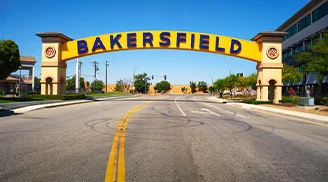
In California, the minimum working age is 14 for most jobs. Minors under 14 can work in a narrow set of circumstances (such as working for a parent’s non-hazardous business, agricultural work, entertainment industry roles with permits, or delivering newspapers), and anyone under 18 is subject to strict rules on hours, permitted job types, and work permit requirements under California law.
California Minimum Age Requirements for Teen Workers
For most jobs, the minimum working age in California is 14. Minors aged 14 and 15 can work in a broad range of settings but face significant restrictions on their hours and job types, especially during the school year.
Minors under 14 are not completely excluded. California law permits children 13 and younger to take on certain jobs without a work permit, including irregular odd jobs at private homes, some supervised sales work, and entertainment industry roles with a permit from the California Labor Commissioner’s Office.
Agricultural work follows different rules. This is especially relevant in California’s Central Valley, including the Bakersfield area, where farming and field labor are common employment options for young workers. Children under 12 can work on farms with parental consent outside of school hours on a parent’s farm, and 12 to 13-year-olds can work in agriculture with written parental consent.
Hours and permit requirements for agricultural minors differ from general industry standards and are governed separately under state and federal agricultural labor regulations. Families in agricultural communities should review these rules carefully before allowing a minor to take on farm work.
Work Permit Requirements for Minors in California
Once an employer agrees to hire a minor, the minor must obtain a Statement of Intent to Employ a Minor and Request for a Work Permit form from their school. The employer and the minor complete the form, and a parent or legal guardian must sign before it is submitted. Emancipated minors may apply for work permits without parental permission.
After the school district reviews and approves the form, it issues the Permit to Employ and Work, which must be on file before the minor can begin working. Employers must also maintain the permit as part of their employment records. During summer or when school is not in session, the school district superintendent handles the permit process.
Work permits expire five days after the start of each new school year and must be renewed annually. Failing to maintain a valid permit on file is considered prima facie evidence of illegal employment, meaning the absence of the permit itself is treated as sufficient initial proof of a violation, with fines starting at $500 for a first offense.
How Many Hours Can Minors Work in California?
Hour restrictions vary by age and whether school is in session under California Labor Code § 1391. The main categories are:
- Ages 14 to 15, school in session: Maximum 3 hours on any school day, 18 hours per week. Work hours limited to 7 a.m. to 7 p.m. (extended to 9 p.m. from June 1 through Labor Day).
- Ages 14 to 15, school not in session: Maximum 8 hours per day, 40 hours per week. Same time-of-day restrictions as above apply.
- Ages 16 to 17, school in session: Maximum 4 hours on any school day, 48 hours per week. Work must end by 10 p.m. on evenings before a school day.
- Ages 16 to 17, school not in session: Maximum 8 hours per day, 48 hours per week. On evenings before a non-school day, work may extend until 12:30 a.m.
A “school day” under California law means any day the minor is required to attend school for 240 minutes or more. Violations may be treated as misdemeanors, with fines starting at $1,000 per violation.
What Jobs Can Minors Do in California, and What Are Off Limits?
Most minors 14 and older can work in retail, food service, office support, and newspaper delivery. Both California law and the federal Fair Labor Standards Act (FLSA) restrict or prohibit minors from working in hazardous settings, including the following:
- Prohibited for all minors under 18: Hazardous occupations, including dangerous machinery, manufacturing, mining, roofing, demolition, and operating motor vehicles on public roads.
- Prohibited for minors under 16: Jobs in food processing plants, use of power-driven equipment, and work near functioning blades or propellers.
- Restrictions for teen workers: California adds prohibitions beyond federal minimums, including restrictions on door-to-door sales and requirements for adult supervision in certain retail and industrial settings.
What California Child Labor Laws Mean for Employers
California child labor laws explained in plain terms come down to three employer obligations: obtain and maintain valid work permits, schedule minors within the statutory hour and time-of-day restrictions, and never assign minors to prohibited or hazardous tasks. California does not allow a youth subminimum wage, unlike federal law, meaning minors must be paid the same minimum wage as adult workers.
Common violations identified by the California Labor Commissioner include scheduling too many hours during the school week and failing to keep a current permit on file. Under Assembly Bill 3234, employers must also disclose any child labor violations discovered during voluntary internal audits, adding another layer of enforcement exposure.
Complaints can be filed with the California Labor Commissioner’s Office. In cases involving industrial accidents affecting minors due to unsafe conditions, additional legal relief may also be available.
Minors injured in unsafe working conditions, including work injuries that occur in roles their age group should not have been assigned to, should have grounds for a workers’ compensation claim.
Young workers assigned to heavy or repetitive physical tasks are also at risk of repetitive stress injuries that can have long-term consequences. These can also qualify for benefits.
Questions About California Labor Laws? Contact J Smith Law, PC
Whether you are a minor whose rights have been violated or an employer trying to stay in compliance, California child labor laws carry real consequences when they are ignored. At J Smith Law, PC, we are a trusted Bakersfield firm known for providing personal attention and straightforward guidance to workers and families throughout the Central Valley. Call us at (661) 716-5555 to schedule your free consultation, or contact us online.
Visit Our Workers’ Compensation Law Firm In Bakersfield
J Smith Law, PC
3100 19th St STE 200, Bakersfield, CA (93301)
Author: Jaime L. Smith